
 Français
  Italiano
  Español
  Deutsch
  Português PT
 .png)
.png)
In endurance competitions, attention is often focused almost exclusively on the horse. However, the rider’s physical...
Search in blog
Blog categories
Latest posts
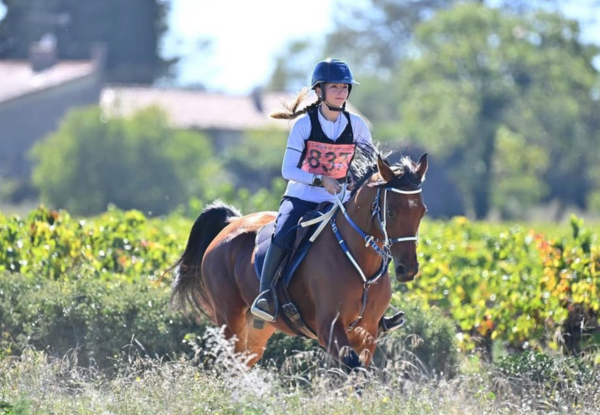
Rider fatigue: nutritional strategies for endurance
Read more
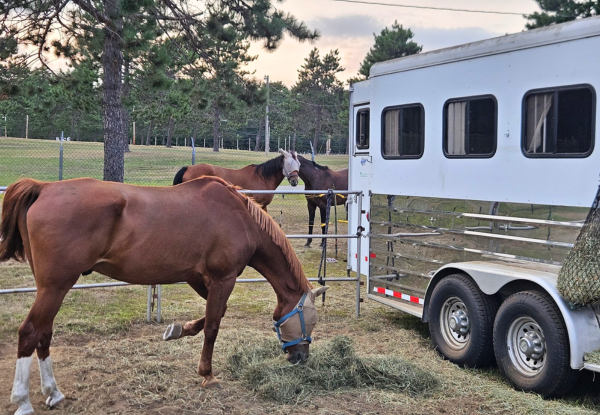
Sleeping at an endurance ride camp: trailer or tent? Read more
Ride camps are mainly held in the United States, and deciding where to sleep at an endurance ride camp is not just a...

How Expert Riders Prepare Their Endurance Setup Read more
Properly preparing the endurance setup is one of the main differences between a beginner rider and an experienced...

Electrolytes During an Endurance Race: When and How to Use Them Read more
Properly managing electrolytes during an endurance race means maintaining the horse’s physiological balance...
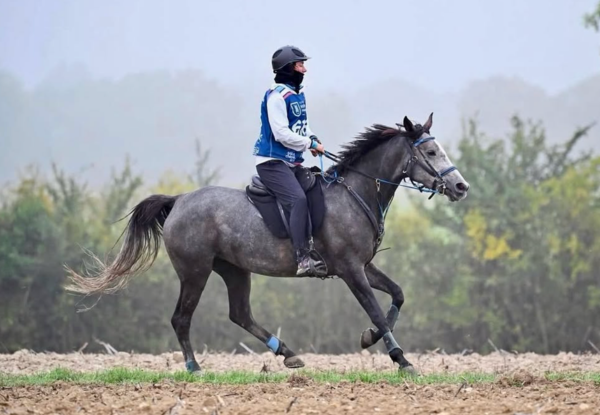
Gastric Health in the Endurance Horse: When to Use a Gastroprotectant Read more
In the world of endurance, much is said about heart rate, recovery, hydration, and effort management, but far less...
Popular posts

How do horses sleep: do they sleep standing up or lying down?
Do you really know how horses sleep? It's not just a fun fact: knowing it helps improve their well-being. A...
Read more
Horse Arnica: properties and benefits of extra-strong arnica gel for horses and human use
Arnica for horses is a powerful natural remedy, also ideal for humans! Discover its benefits and how to use it for...
Read more
How much does horse riding cost? A guide for parents and enthusiasts
How much does horse riding cost? Find out the price of lessons, equipment, and horse care, with strategies to enjoy...
Read more
Horse bits: A complete guide to choosing snaffle bits and curb bits
A technical guide to choosing the right bit: learn the difference between curb and snaffle and find the best option...
Read more
What do horses eat? A complete guide to horse feeding for optimal health
Do you really know what horses eat? In this simple and complete guide, you will learn how to feed them in the best...
Read moreFeatured posts
Sweet itch in horses: Symptoms, causes and treatments for a healthy coat
Everything you need to know about horse sweet itch: a complete guide with symptoms, causes, and helpful remedies to...
Read more
Rider fatigue: nutritional strategies for endurance
RIDER FATIGUE IN ENDURANCE: NUTRITIONAL STRATEGIES TO MAINTAIN ENERGY AND MENTAL CLARITY
In equestrian endurance, people often focus on the horse’s preparation, stamina and veterinary management during the race. However, an equally important aspect is the rider’s physical and mental condition.
Rider fatigue can affect posture, coordination, mental clarity and the ability to make correct decisions during many hours in the saddle.
An endurance race can last several hours. Even though the horse does the main work, the rider continuously consumes energy.
Without an adequate nutritional strategy, drops in concentration, loss of mental clarity and difficulty managing the horse’s pace may appear.
Key idea: in endurance, the rider is not a passenger. The rider is an active part of the partnership and must stay clear-headed, hydrated and reactive until the end of the race.
RIDER’S FATIGUE MATTERS AS MUCH AS THE HORSE’S
Rider fatigue can affect posture, coordination and the ability to make quick decisions during many hours in the saddle.
A fatigued rider may lose precision in balance, react more slowly to changes in the terrain and interpret the horse’s signals with less attention.
This does not mean that the rider must follow a complex or extreme nutritional strategy. Rather, it means avoiding improvisation.
Hydration, small energy intakes and foods already tested during training can make a big difference.
“A clear-headed rider manages the pace better, protects the horse and makes better decisions in the decisive moments of the race.”
WHY RIDERS GET TIRED DURING AN ENDURANCE RACE
During a race, the rider constantly maintains balance, posture and coordination while following the horse’s movement.
This continuous work involves significant energy expenditure.
In prolonged activities of this type, consumption may be approximately 200–400 kcal per hour, depending on duration, intensity, temperature, body weight and training level.
In addition to physical fatigue, cognitive fatigue also comes into play. The rider must interpret the terrain, control the pace, observe the horse’s signals and make strategic decisions.
When energy drops, concentration and coordination can also decrease noticeably.
Factors that increase rider fatigue
Race duration: more hours in the saddle mean greater energy expenditure.
Uneven terrain: climbs, descents and changing surfaces require more postural control.
Heat and humidity: increase sweating and the risk of dehydration.
Mental stress: the rider must constantly assess pace, timing and the horse’s condition.
Insufficient nutrition: too few carbohydrates can lead to drops in energy and mental clarity.
THE ROLE OF CARBOHYDRATES IN ENERGY MANAGEMENT
In endurance sports, carbohydrate management is one of the most important factors for maintaining performance and mental clarity.
The goal is not to consume large amounts of food at once, but to distribute energy over time to avoid fluctuations in blood glucose levels.
For activities lasting more than 90 minutes, a common reference is an intake of about 30–60 grams of carbohydrates per hour.
In very long races, and only if the rider is used to tolerating them, this can reach up to 90 grams per hour.
Carbohydrates and race duration
| Race duration | Goal | Recommended strategy |
|---|---|---|
| Up to 90 minutes | Maintain energy stability | Water and small snacks if needed |
| Over 90 minutes | Avoid energy drops | 30–60 g of carbohydrates per hour |
| Very long races | Support energy and mental clarity | Up to 90 g per hour, only if already tested |
Individual tolerance is decisive. Not all riders digest gels, bars, fruit or energy drinks in the same way.
For this reason, every strategy should be tested first during training.
ENERGY GELS DURING THE RACE
Among the most commonly used solutions in endurance contexts are energy gels.
These products provide rapidly available carbohydrates and are designed to be consumed easily even during physical activity.
An energy gel generally contains 20–30 grams of carbohydrates, which can help maintain a stable energy level.
Many endurance riders use gels especially in the middle phases of the race, when fatigue begins to accumulate.
However, it is important to always take them with water to support absorption and reduce the risk of gastrointestinal discomfort.
Energy gels: benefits and precautions
| Benefits | Precautions |
|---|---|
| Easy to carry | Must be taken with water |
| Rapid carbohydrate intake | May cause discomfort if not tested |
| Useful during energy dips | Do not replace a complete strategy |
| Simple dosing during the race | Better not to try them for the first time in competition |
Practical tip: energy gels should be tested during long training sessions. Race day is not the right time to experiment with new products.
HYDRATION AND MENTAL PERFORMANCE
Hydration is closely linked to energy management and mental clarity. Even mild dehydration can affect concentration, coordination and decision-making ability.
Fluid loss equal to about 2% of body weight can already negatively affect physical and cognitive performance.
For this reason, many riders use hydration systems that allow them to drink small, frequent sips.
Hydration packs make this approach easier, allowing a constant fluid intake without interrupting the race pace.
Practical note
Drinking only when you feel thirsty may not be enough during a long race. It is better to take small sips regularly, especially on hot or humid days.
WHEN AND HOW MUCH TO EAT DURING AN ENDURANCE RACE
An effective nutritional strategy is based on regularity. Instead of consuming large amounts of food sporadically, it is more useful to integrate energy in small doses at regular intervals.
During vet gates, it is possible to consume slightly more substantial foods, but they should always be easy to digest.
The key is to avoid both prolonged fasting and excessive food intake that could slow digestion.
Example of a race nutrition strategy
| Moment | What to do | Goal |
|---|---|---|
| Before the start | Balanced breakfast 2–3 hours before | Start with adequate energy reserves |
| During the race | Small regular carbohydrate intakes | Avoid energy drops |
| During vet gates | Digestible snacks and fluids | Recover without weighing down digestion |
| Final phases | Gel or fast carbohydrates, if already tested | Maintain mental clarity and coordination |
NUTRITION BEFORE THE RACE
The nutritional strategy begins long before the start. A balanced breakfast about 2–3 hours before the race allows the rider to start with adequate energy reserves.
Complex carbohydrates are often a suitable choice because they release energy more gradually.
It is preferable to avoid meals that are too rich in fats or fiber, as they may slow digestion and create discomfort during the first hours of the race.
This routine should also be tested during training to understand what works best for each rider.
What to prioritize and what to avoid
| Prioritize | Limit before the race |
|---|---|
| Complex carbohydrates | Very fatty meals |
| Foods already tested in training | New foods never tried before |
| Progressive hydration | Large amounts of fluids at the last moment |
| Simple and digestible portions | Excess fiber if not tolerated |
NUTRITION AND CLARITY IN DECISION-MAKING
In equestrian endurance, performance is not only about physical stamina.
The rider must make decisions for many hours: choosing the right pace, interpreting the terrain, observing the horse’s signals and managing timing at vet gates.
Nutrition directly contributes to the ability to maintain mental clarity throughout the race.
An effective nutritional strategy therefore helps not only to reduce physical fatigue, but also to maintain the concentration needed to manage each phase of the competition correctly.
“Taking care of the rider’s nutrition means protecting mental clarity, posture and the ability to manage the horse in the most delicate moments of the race.”
NUTRITIONAL CHECKLIST FOR THE ENDURANCE RIDER
Before a race, it can be useful to prepare a small personal checklist. It does not need to be complicated, but it should help the rider avoid improvisation.
Test gels, snacks and drinks during long training sessions.
Prepare a simple and digestible breakfast 2–3 hours before the start.
Plan small carbohydrate intakes during the race.
Drink regularly, without waiting until you are very thirsty.
Use vet gates also to recover energy and fluids.
Avoid new foods on competition day.
Adapt the strategy to temperature, duration and race intensity.
COMMON MISTAKES TO AVOID
Many energy drops during a race do not depend on a single mistake, but on a series of small wrong choices.
The most common problem is improvising nutrition on competition day.
| Mistake | Possible consequence | Practical solution |
|---|---|---|
| Not eating for many hours | Drop in energy and concentration | Plan small regular intakes |
| Drinking too little | Dehydration and loss of clarity | Drink small frequent sips |
| Trying new gels during the race | Gastrointestinal discomfort | Test everything in training |
| Eating too much at vet gates | Slow digestion and heaviness | Choose simple and digestible foods |
FREQUENTLY ASKED QUESTIONS ABOUT ENDURANCE RIDER NUTRITION
How many carbohydrates should a rider consume during an endurance race?
For races lasting more than 90 minutes, a common reference is about 30–60 grams of carbohydrates per hour.
In very long events, this can reach up to 90 grams per hour, but only if the rider has already tested this strategy in training.
Are energy gels suitable for all riders?
Not necessarily. Gels can be useful because they are practical and quick to consume, but they must be tested before the race.
Some riders tolerate them well, while others may experience gastrointestinal discomfort.
When should you drink during a race?
It is preferable to drink small sips regularly, without waiting until you are very thirsty.
Hydration packs can help the rider maintain a constant fluid intake.
What should you eat before an endurance race?
A balanced breakfast 2–3 hours before the start, rich in easily digestible carbohydrates and low in fats and excessive fiber, can help begin the race with greater energy stability.
Does rider nutrition also influence the horse?
Indirectly, yes. A more clear-headed, coordinated and reactive rider can better manage pace, breaks, the horse’s signals and strategic decisions during the race.
RIDER ENERGY AND THE SUCCESS OF THE HORSE-RIDER PAIR
In endurance races, the horse’s preparation is fundamental, but managing the rider’s energy also plays a decisive role.
Constant hydration, small regular carbohydrate intakes and a nutritional strategy tested in training help maintain energy and mental clarity throughout the race.
Riders often focus exclusively on managing the horse, forgetting that their own physical and mental state also influences the quality of their decisions.
Taking care of the rider’s nutrition therefore means improving race management and contributing to the success of the partnership.

Related posts
 The ultimate guide to choosing the perfect size for your KEP ITALIA horse riding helmet
Discover how to choose the perfect size for your KEP ITALIA horse riding helmet with our comprehensive guide. Learn...
Read more How to choose the right horse blanket: a complete guide to protecting your horse from the coldWith the arrival of winter, ensuring your horse’s well-being is essential. This article will guide you in selecting...
Read more Technical guide to maintaining your saddleThe new Equitime leather care line revolutionizes saddle maintenance. In this technical guide, you will find...
Read more How much does horse riding cost? A guide for parents and enthusiastsHow much does horse riding cost? Find out the price of lessons, equipment, and horse care, with strategies to enjoy...
Read more How to clean leather riding boots: A complete guide to perfect careA complete guide on how to clean riding boots and keep them in perfect condition. Find practical tips, mistakes to...
Read more